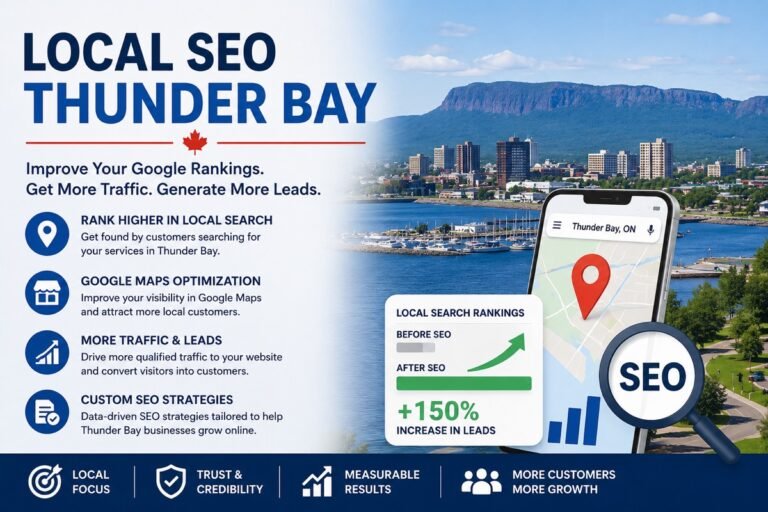
A seasonal content calendar
Pages timed to each season and published early enough to be indexed when searching starts.

Outdoor and guiding SEO
For charter captains, independent guides, ice-fishing rental outfits, hunting and hiking stores, and snowmobile rental yards. Trips are planned weeks ahead, and prices are compared before anyone books.
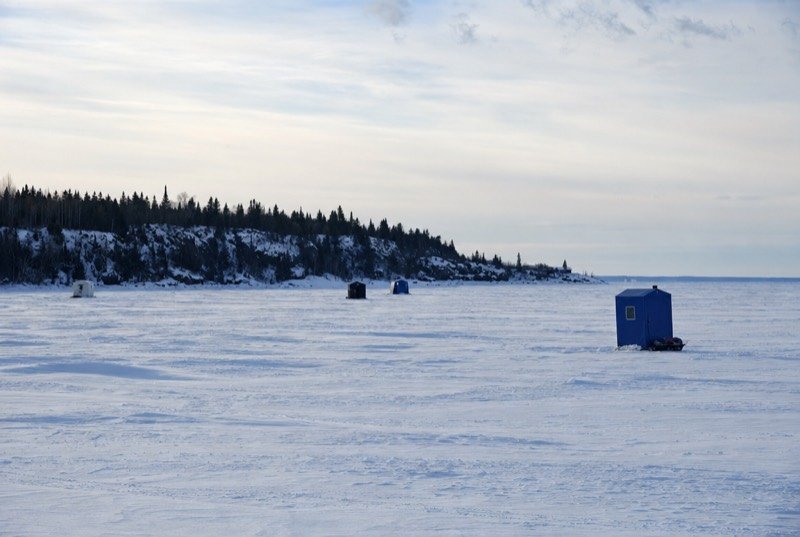
Outdoor trade in Thunder Bay, Ontario follows the calendar more closely than almost any other. Open water brings searches for charters, guides and the weekly thunder bay fishing report; autumn turns to thunder bay hunting season; once the bays freeze, people want shelters and rentals. With 162.9 cm of snow in an average year, that winter stretch is long.
Each season has a short window when people decide. A guide still showing last summer’s rates in February, or an ice-fishing page that appears after the first good weekend, hands those searches to whoever planned ahead.
Half of the ten suggestions for thunder bay ice fishing are about shelter: tents, huts, shanties and rentals. Pages that name Lake Superior, the bays you fish and the gear you rent out match those searches, and an 807 number tells anglers you are right here.
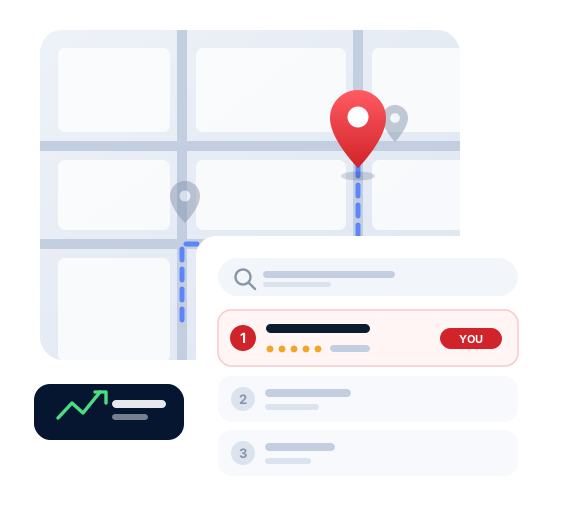
Search demand
These are Google.ca’s own autocomplete wordings, recorded in October 2026; rates, equipment and seasons recur through the list.
A new page takes time to be found and trusted, so one written the week the ice firms up usually misses that winter. We plan a season ahead: ice-fishing rentals in autumn, charters in late winter, hunting gear in summer, then refresh each page with current dates and prices instead of replacing it.
What we find
Four patterns that turn up when we look at outdoor businesses around the city.
Price searchers spot a stale year straight away. Date your rate card and update it each season, even when the numbers stay the same.
Hunting gear, snowshoes and ice-fishing shelters each need a page. A single “products” list gives Google nothing specific to show.
Visitors plan in the evening, often from out of town. A simple enquiry form or online calendar catches the request while they are still deciding.
Photos from your own trips and the species you target tell a stranger more than any adjective.
The work
Pages timed to each season and published early enough to be indexed when searching starts.
Separate pages for charters, guided days, rentals and main product lines, with dated prices.
Seasonal hours, a pin that matches where customers really meet you, and fresh photos from the current season.
Lake Superior and Northwestern Ontario written into titles and profiles, so anglers see at once where you fish.
A message after each outing asking guests about their day, which tends to bring reviews naming the species.
On the Pro plan, Google Ads that run only in the weeks people book and pause when you are full. Ad spend goes to Google separately.
Done carefully
Every trade has its own rules and regulators. These are the limits we keep on this kind of work.
We sell the trip you actually run, in conditions you know, and leave out promises the lake can break.
The Competition Act applies to outdoor advertising like anything else, so we avoid catch claims and pictures that are not yours. Licence and safety details point customers to the official source instead of restating rules that may change.
Ask us about your business
How we work
From a first look at your listing to a short monthly report you can read over coffee.
We study your site and Business Profile, then test where you surface from several corners of Thunder Bay.
Together we settle on the searches that matter and tie each to one page or one listing change.
Profile, site, content and directory fixes, beginning with whatever should shift results soonest.
Each month you see the calls, messages and positions we tracked, plus what we will tackle next.
Questions
It can be, because the quiet months are when pages get written and indexed. Some owners pause ads in the off-season but keep the content work going.
Make your location unmistakable: name Lake Superior and the areas you work in your titles and profile, and keep your address and 807 number identical everywhere.
Usually, yes. People search for prices directly, and a dated rate card saves calls from people who were never going to book. Custom trips can still be quoted separately.
thunder bay fishing report is a real search, so short, honest updates from your own trips can bring repeat visitors, as long as you keep them current.
Starter, Growth and Pro cost $300, $500 and $700 a month respectively, in Canadian dollars, with no long-term contract on any of them. Google Ads management is exclusive to Pro, and Google bills your ad spend. The pricing page sets out the full comparison.
Further reading
More on this topic, written for business owners in Thunder Bay.
Any of these can be taken on its own; many clients begin with just one.
Every trade is searched in its own way here, so every page is researched separately.
Ask for a free audit: where you show up on the north side and the south side, who sits ahead of you, and which fixes to make first.
Ask for my free audit