The easiest way to see what local SEO does for a business in Thunder Bay, Ontario is to follow one customer from the moment they pick up their phone to the moment they call someone. Take a homeowner in Current River on a January night, with the furnace making a noise it should not make and a long stretch of cold ahead. Thunder Bay averages about 163 cm of snow a year, so this is not an unusual evening. Here is where a business wins or loses that job.
Step one: the words they type
They type something short, like thunder bay furnace repair or thunder bay heating and cooling. Other customers, in other months, type things just as plain:
- emergency dentist thunder bay open now
- roofing contractors in thunder bay ontario
- thunder bay snow removal services
- chiropractor thunder bay red river road
- thunder bay camps for sale
- thunder bay hotels near hospital
Short searches still need a clear answer. Naming your street, your side of the city and “Thunder Bay, Ontario” on your website and Business Profile tells Google exactly where you are, so it can show you to the people searching nearby.
Step two: the short list on the map
For a search like this, Google puts a map with a handful of businesses above the ordinary links. Which ones appear depends on how well each business matches the search, how close it is and how well established it looks online.
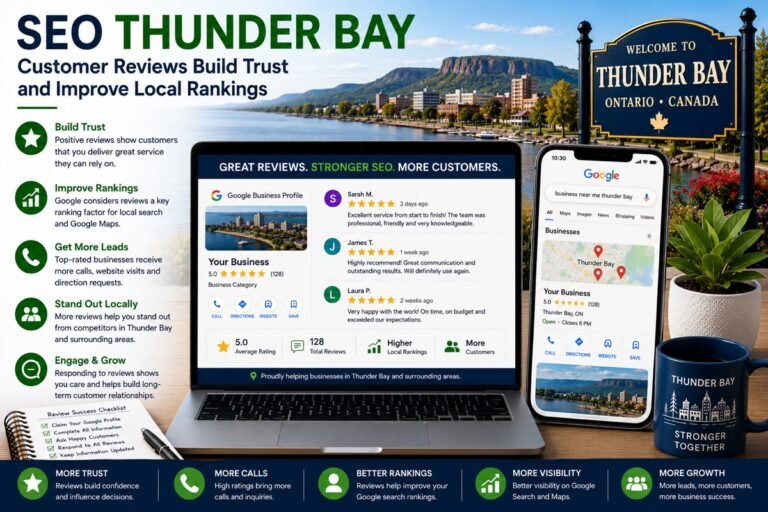
Distance matters more here than people expect. The north side and the south side, the old Port Arthur and Fort William, are still distinct, and a company based in Westfort may not appear for someone searching from Current River unless its listing makes clear it serves the whole city and places like Shuniah, Oliver Paipoonge and Neebing. Accurate categories, real hours, a stated service area and honest, recent reviews are what put a business on that short list. Our Google Maps SEO work is about exactly that.
Step three: the quick check
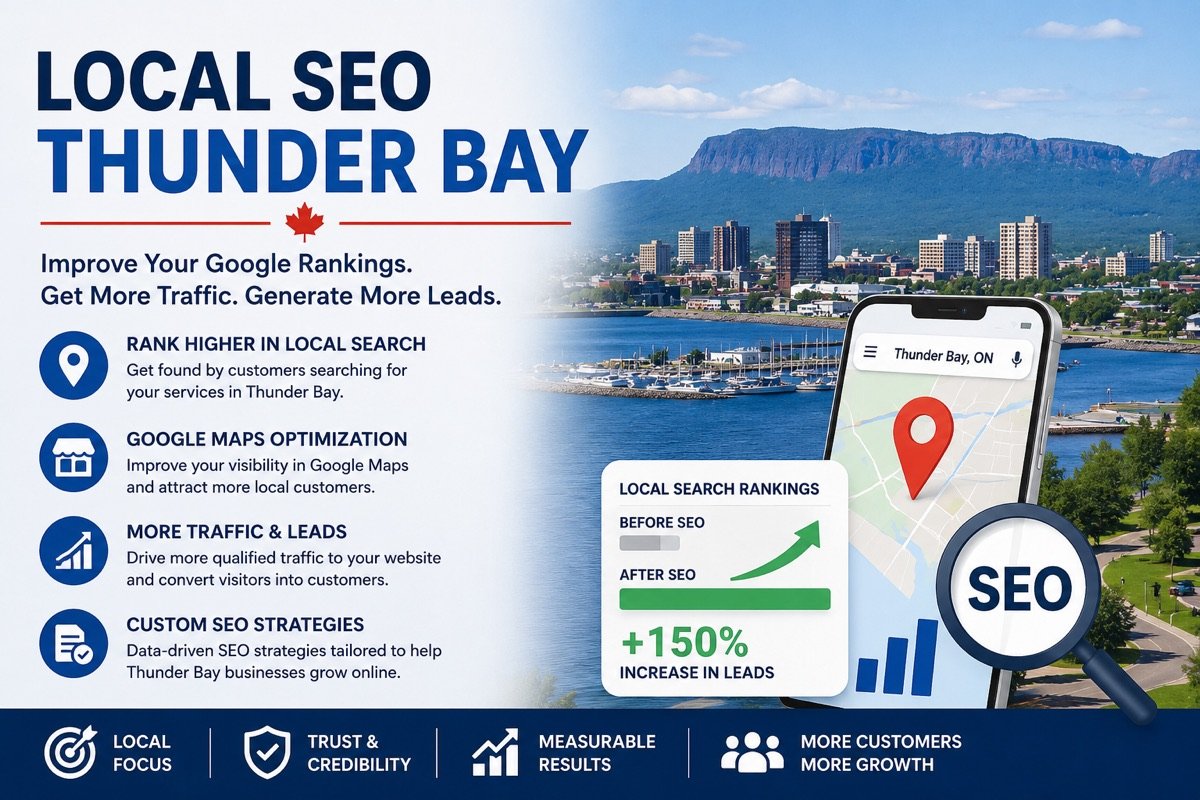
Before calling, most people tap through to a website for a few seconds. They are checking three things: do you do this job, do you come to my area, and how do I reach you right now? A single “Services” page that lists twenty things rarely answers that. A page about furnace repair, written for Thunder Bay homes and naming the neighbourhoods you cover, does. Because search volume in a city of about 109,000 is modest, specific pages like that tend to do better than broad ones. That is the core of our local SEO service, and a clear, quick site built through website design keeps the check from turning into a back button.
Step four: the call, and what you learn from it
The last step is the easiest to lose. A phone number buried at the bottom of a page, or a contact form that does not work on a phone, ends the journey one tap from the finish. Once the path is clear, every call, form and direction request can be counted.
Other journeys worth mapping
Furnaces are one example. Thunder Bay is the regional hub for Northwestern Ontario, so many customers start from outside the city: families visiting the hospital, camp buyers from across the district, crews and suppliers tied to mining and forestry. Each of those has its own search, its own short list and its own quick check.
Where to begin this month
Pick your three most common jobs. Search for each on your phone from the north side and then the south side, and write down who appears. Fix what you can on your listing first: hours for winter, categories, service area. Most businesses see movement within three to six months, though nobody can promise a ranking. If you would rather have someone walk the journey with you, book a free SEO audit to see where customers drop away.